


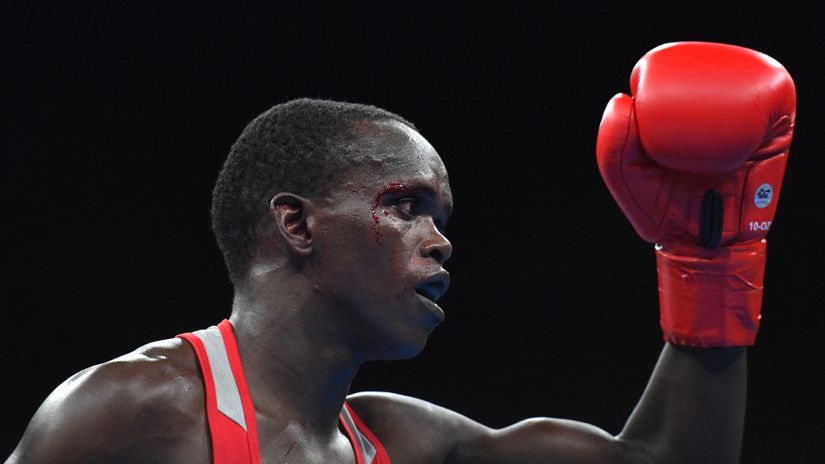
Benson Gicharu: Former Olympic boxer with heart wrenching story and mental health mission
.jpg)
.jpg)
.jpg)

Reading Time: 12min | Mon. 28.03.22. | 09:36
If you ever needed an inspirational story then you have come to the right place as Gicharu's tale is nothing but that.
There are only a handful of superlatives that can best encapsulate the resilience and the treacherous path to success of former boxer Benson Gicharu who has overcome adversity to become a two time Olympian but despite hanging his gloves in 2018 he has embarked on another fight of tackling mental health issues at Mukuru Kayaba as a way of giving back to the community that raised him.
Since the turn of the century, mental health issues have been wreaking havoc across the globe with some 703,000 people dying by suicide every year globally and the Wealth Health Organisation (WHO) affirms that suicide was the fourth leading cause of death among 15-29-year-olds in 2019.
Back in 2021, an alarming report revealed that 483 deaths were reported in Kenya to have killed themselves in the three months to June 2021, more than the whole of 2020, according to the Kenyan police.

This is the magnitude of the fight Gicharu is set to undertake but the positivity he radiates leaves you without a shadow of a doubt that despite not being able to affect the whole nation he can change the lives of youth in Mukuru Kayaba.
The ambitious flyweight boxer also harbours dreams of having a free library in Mukuru to come to the aid of poor backgrounds by bridging the gap of education after also benefiting from the Goal Centre Library as he prepared to sit for his final exam in secondary school.
To better grasp his dream of offering free counselling at Mukuru Kayaba, we are taken back to 1985 when Gicharu took his first breath on the face of the earth in Kangema, Murang’a. After five years like many who find their way to the capital to chase their dreams, Gicharu found himself in Mukuru Kayaba, a popular slam in South B.
Born in a family of three, a sister and a brother before they could settle into the fast-paced life of Nairobi, a plethora of problems were knocking at their door chief among them being operating on a shoestring budget which meant that Gicharu was in and out of school.
“My mum was not able to pay school fees because after KCPE my mum suffered an accident and she was bedridden and that had an effect on me not joining school.
I insisted on joining a mechanic course to support her but she refused because I was responsible for her dropping school because she gave birth to me at a young age so she did not want me to go through the struggles,” says Gicharu with a long face.
His struggles in pursuit of education are well documented as he attended six primary schools with challenges of school fees rearing its ugly head and he also did not do himself a world of good by adopting an obstreperous behavior which were some the makings of becoming a revered boxer in the hindsight.
Gicharu deliberated quitting school in 1997 after the family was unable to raise school fees and at some point was sent back to Murang’a after being unruly in school but he finally saw the light after eavesdropping on a conversation between the mum and his aunt.
“There was a day I came home and my mum was talking to one of my aunties and telling her how she wished I would go back to school,” explained Gicharu with a pensive look on his face.
As if the world taking a beating on his life was not enough, his life came tumbling down in 1998 when his dad took his own life which marked a dark period in his life but at the age of 14, he had no option rather than quickly pick up the pieces.
“After my dad passed away I took up boxing as a way of venting out what I was going through and I was very naughty in fact I have a lot of marks on my head because I was in a number of fights in school.”
After sitting for his KCPE in 2000, he sat out of school for a year after failing to raise enough school fees but after pulling all stops to finally join school, his earliest breakthrough dawned while still in form three as he earned a chance to go to Qatar through a boxing program.
“Some Qatari boxing club had come to Kenya in 2004 and there was the late Joshua Ndere who had gone for Military Games and he performed so well that the Qatari club wanted to sign him.
So when they came to sign him they called other boxers in the National Team which I wasn’t part of but I gatecrashed the party so they saw me as potential because I was talented and still 18 years old,” remarks the 36-year-old who turns a new page in May.
Having sacrificed his education, fate was on his side despite his tender age as he made the cut to join the club which came with a decent package that he sent home to the mum to support the family.
Life in Qatar was however not a bed of roses as he run into a number of challenges as he shared similar thoughts to Dennis Oliech who sometime back criticized Michael Olunga’s move to Qatari side Al Duahil after going through favouritism.
“What made me return was that they have racism and at that time their boxers were going for a vacation in Morocco but we were told to remain and it was in summer when the sun was scorching hot.
When we stayed behind we asked to be given our contracts which brought a lot of issues and we decided to return back home,” explains Gicharu.
The situation forced Gicharu to pack his bags once again and returned to the country to continue with his studies and also joined Police Boxing Club after impressing them having gained a wealth of experience under a Cuban coach while in Qatar.
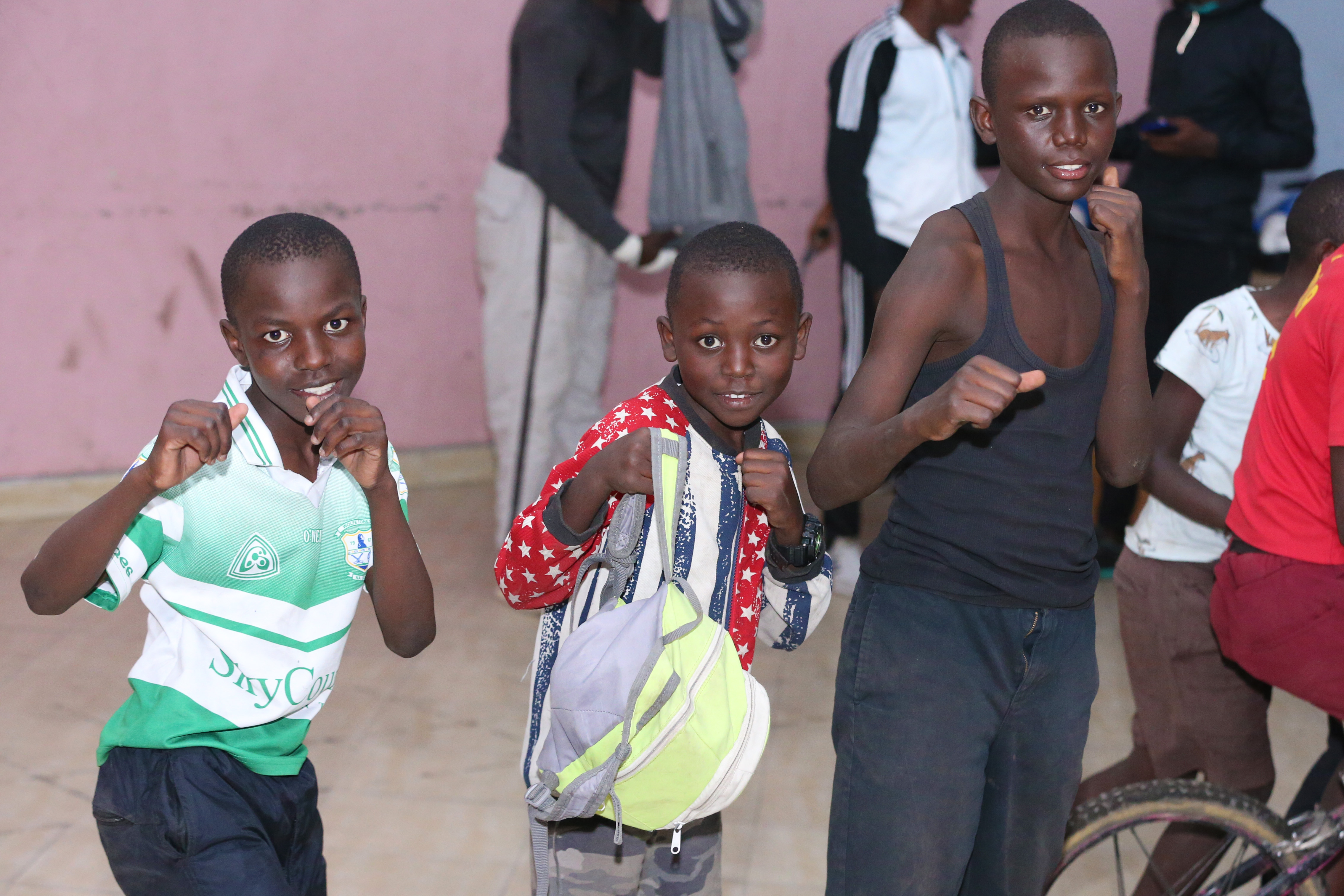
His stint with the Law Enforcers did not last long but two years after leaving Police in 2007, things started to look up for Gicharu as he was called up to the Boxing National Team in 2009 but being an amateur he had his work cut out to compete on a high level.
In his maiden competitive fight abroad, Gicharu lost in the 2009 World Championships in Berlin, Germany but sought redemption in the 2010 Commonwealth Games in New Delhi, India and mined Silver for Team Kenya after urging his family while leaving for the games not to welcome him at the airport if he failed to bag a medal.
A number of losses in league matches led to questions on his future in the National Team but his ability to bounce back when faced with adversity was displayed again as he went for the Bingwa wa Mabingwa tournament in Tanzania and returned with Gold with his friend Moses Mathenge revealing to him that a slip up in the tournament would have led to his exclusion as his head was on the chopping board.
The words of Mathege served as a wake-up call for Gicharu as he kick off his journey of unleashing the beast in him by going through rigorous training and sought the help of Puerto Rican professional boxer McWilliams Arroyo.
“I decided to embark on some research and realised the person I beat (Victora Baktora) in the Bingwa wa Mabingwa had previously beaten Suleiman Bilal which gave me motivation. I realised that I did not have a lot of power in my punches.
So in the World Championships in Milan McWilliams Arroyo who I still appreciate to date accepted my friend request and we started communicating and he gave me tips on how to pack a lot of power,” explained Gicharu.
#olympicsrecap
— TeamKenya (@OlympicsKe) July 18, 2020
Benson Gicharu Njangiru (born 3/5/1985) is an Armateur Boxer won silver🥈 at the 2010 Commonwealth Games in Delhi ( flyweight)
Bronze 🥉medal at the 2014 Commonwealth Games ( bantamweight)
for the 2012 Olympics (flyweight) pic.twitter.com/4k8mTi6f1b
Among his notable achievements under his belt are the silver bagged in the 2011 Benzir Buto tournament, featuring in the 2012 Olympics, a Round of 16 berths in the 2013 World Championships and securing bronze in the 2014 Commonwealth Games.
Having represented the country in the 2012 Olympics, Gicharu had to dig deep to secure back to back appearances at the international multi-sport event as he lost a number of qualifier tournaments and saw his indefatigable spirit that does not waver qualify by pulling what he now infamously terms as 'The Miracle in Venezuela'.
“I usually call my qualification journey the miracle in Venezuela because I travelled from Kenya to Venezuela without a visa and accommodation money or food but still went on to qualify and won Gold to qualify for the Olympics,"
He was seeded number one in the continental qualifiers and was a huge favourite to win but lost the first game and went to Baku, Azerbaijan for the second qualifier and still seeded number one but after winning two games he was unfairly judged to have lost.
"After losing Nick Okoth who is a two time Olympian came to the changing room in tears and told me that the judges were not fair but I told him God is in control. So seven days to the qualifiers in Venezuela I kept on calling the coach to find out about logistics,” Gicharu says as he struggles to hide his grimace.
The stakes were ramped up when the Boxing Federation helped him secure a single ticket which meant that he travelled without a coach and without a visa as he failed to apply due to the numerous uncertainties.
On Tuesday evening I host former Kenyan boxer Benson Gicharu for an interactive session. He is one of the most successful Kenyan boxer having qualified for All Africa, Commonwealth and Olympic Games #OneonOne pic.twitter.com/wYy316pNca
— Jeff Kinyanjui (@Nyash88) June 8, 2020
At the Jomo Kenyatta International Airport (JKIA), Gicharu had luck on his side as he was allowed to pass through passport control but was denied a chance to board the plane and after convincing the flight attendant by displaying in boxing equipment he was allowed to board the plane but was told he needed a miracle to proceed to Venezuela after a layover in France.
“In France, they let me proceed to Venezuela after looking at my record book which was packed into my hand luggage because I had formed a habit of packing everything. In Venezuela they allowed me to pass after going through my passport for half an hour and by sheer luck met the boxing referees in the airport and shared with them the same hotel,” said Gicharu.
As if the stars had alighted for Gicharu, he bumped into Thulasi Helen in Venezuela who he had met in Germany back in 2015 and agreed to accommodate him but word quickly spread of the boxer’s plight with the Venezuelan Sport Minister then according him better accommodation.
Having come so far and eager to give back to those who had come to his aid during the entire trip, Gicharu beat an Italian boxer in the first qualifying match before pulling a home upset by beating a Venezulean and after a Dominican Republic opponent failed to show up in the final he managed to qualify with all odds stacked up against him.
Just as in 2012 there was nothing to write home about Gicharu’s performance after the Olympics and decided to hang his gloves two years after the games having lost a number of fights and admitted that he should have called time on his career after 2016.
“According to the things that I have done in the past from 2018, I think the Olympics was supposed to be my last match because in 2017 I had a vision of taking up art and using it to inspire people but it really did not make sense to me so I brushed it off.”
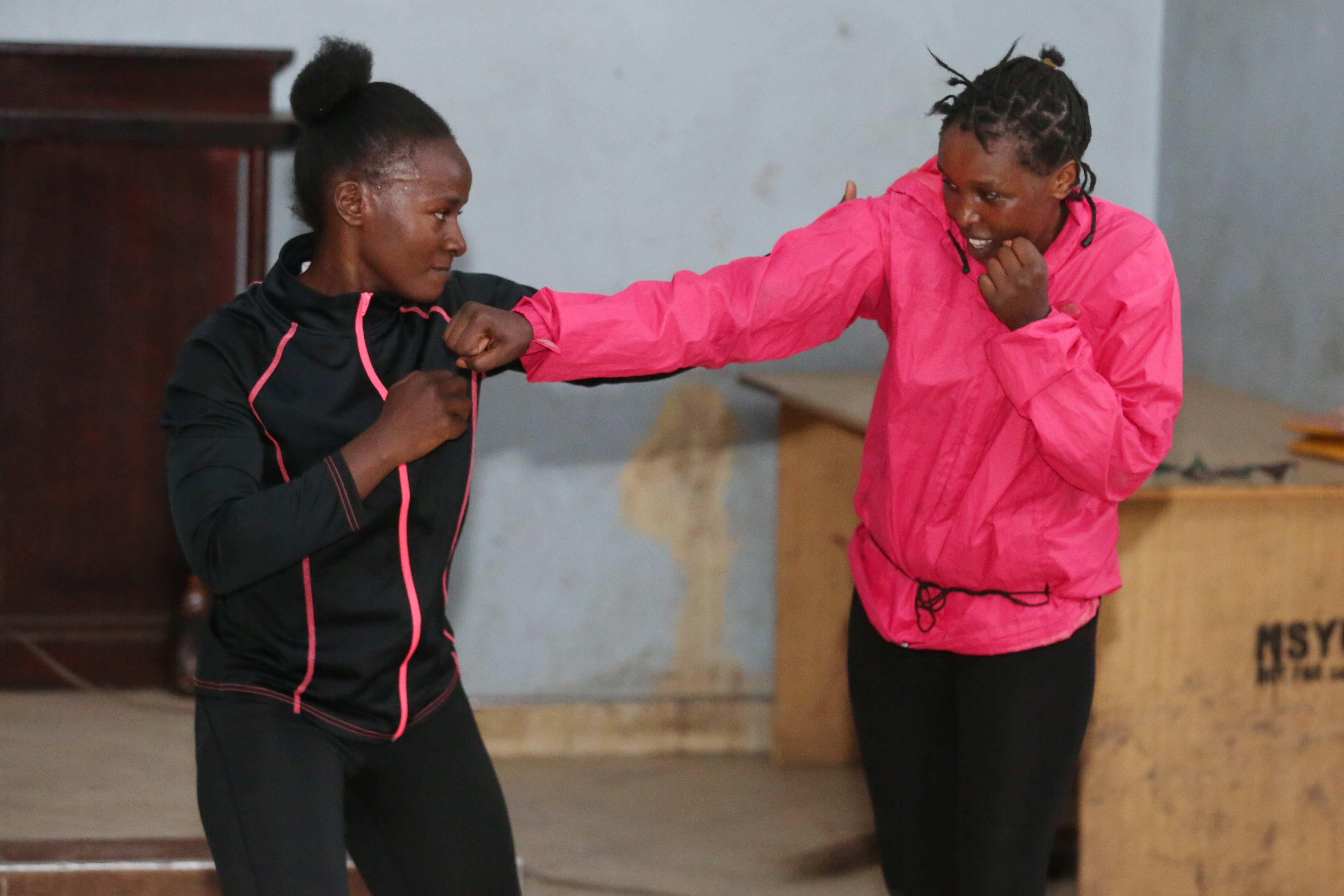
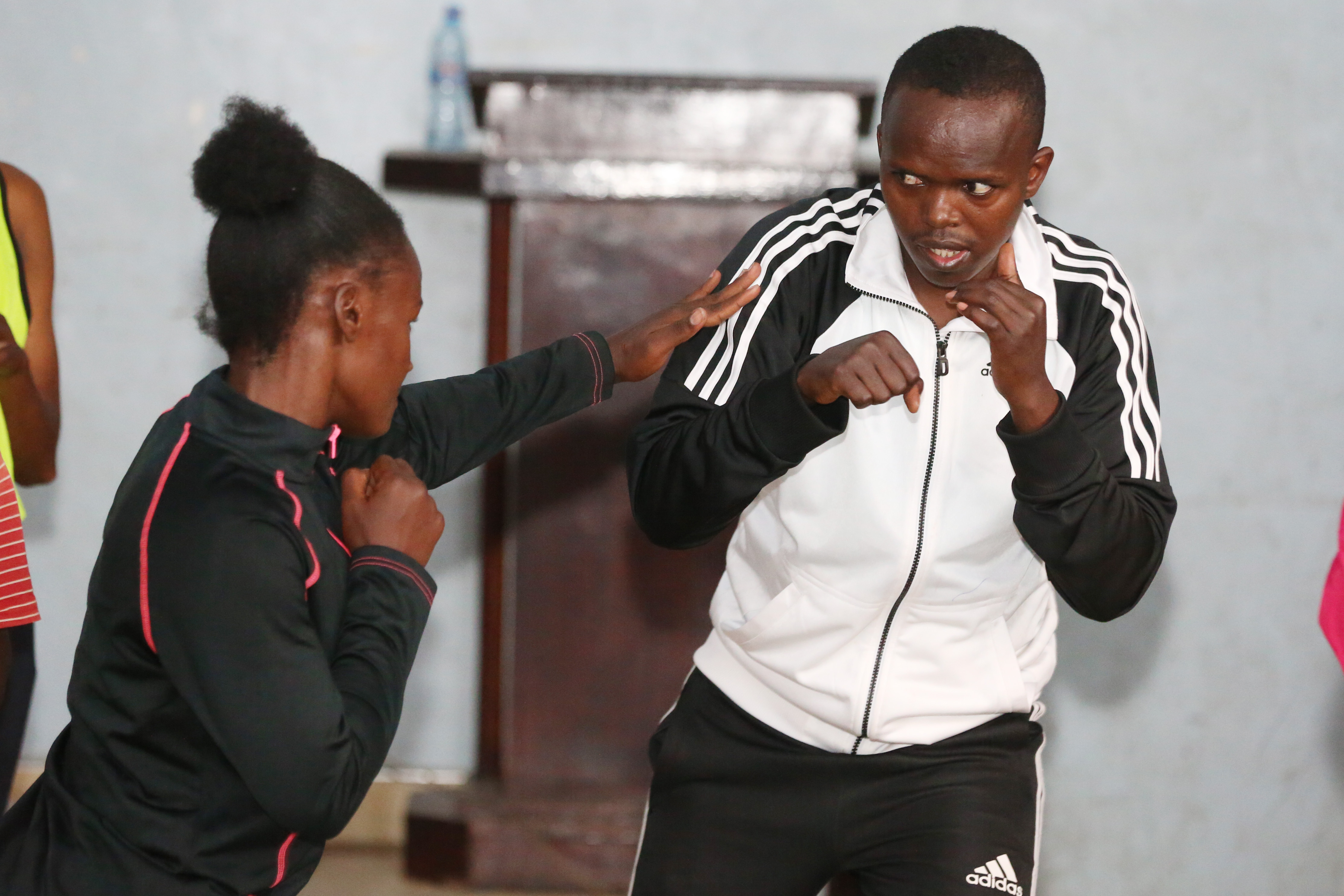
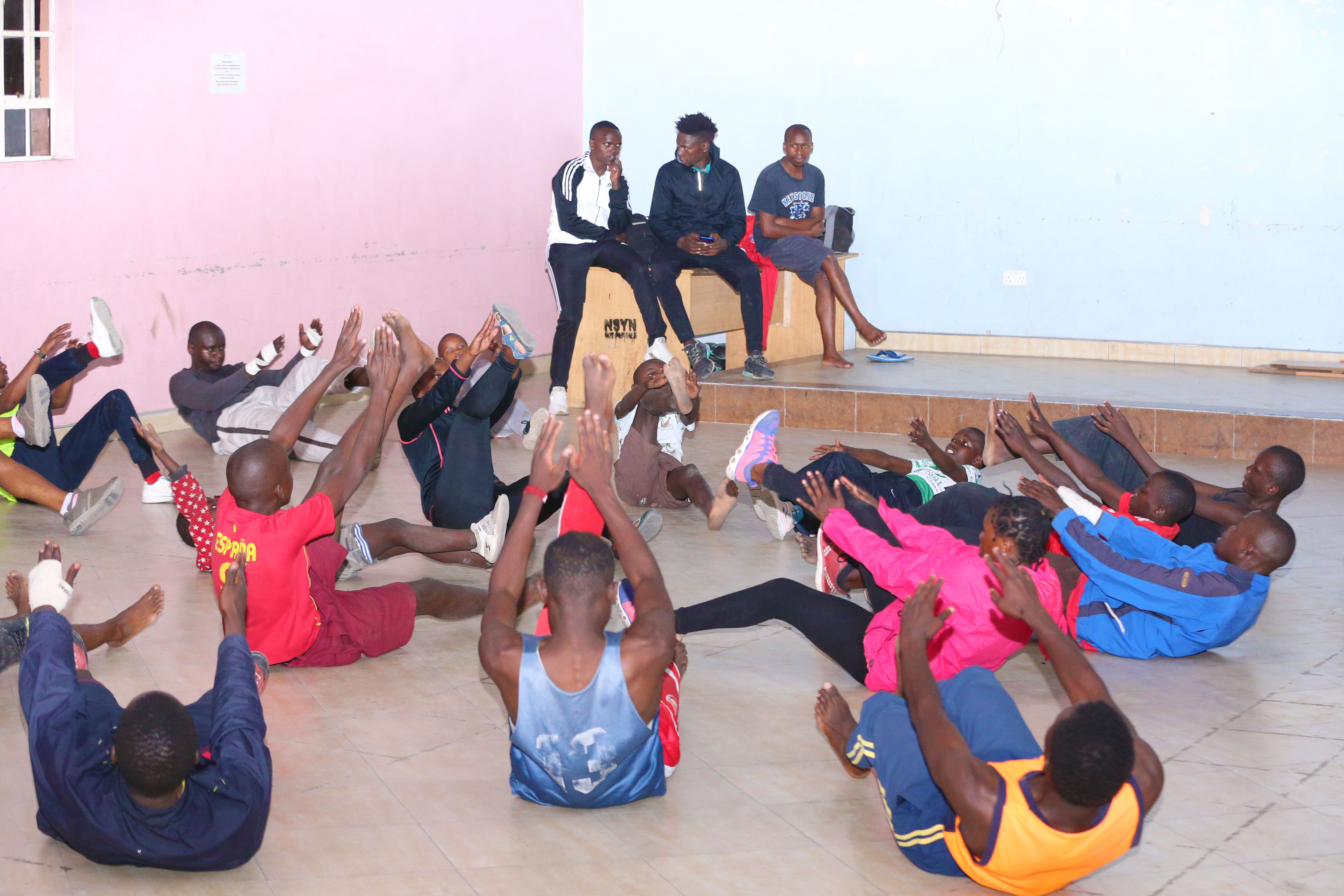
Gicharu has been making himself busy by taking up a Diploma in Counselling Psychology to take his first steps into setting up his free counselling centre but also doubles up as a coach for his boxing academy dubbed Mukuru Fight for Life that has over 40 youth having started it back in 2018.
“I took up coaching because everything I achieve will not last after my death but the lives I touch will always live on for generations and that is why Mother Teresa said, ‘Ýou will never find yourself until you lose yourself at the service of others.
I believe what is never measured is not done and that is why I have given myself 20 years to coach and the first 10 will be more hands on and the last 10 will be more of charity work,” explains Gicharu.
Just two years into his project, Gicharu is already reaping the benefits of his academy as this year a 16-year-old and a 17-year-old took up their novices that have left him proud and also opened up on why he plans to set up a free counselling centre.
“In life, people go through a lot even the kids in my academy share some things with me and I help them the best way I can. We all have different mental strengths, it's always good to help someone find solutions to their own problems because they are the only ones who can help themselves.
“I want to have a free counselling centre that will majorly deal with teenagers because they are very important in the society and at that stage in life is where they can get it right by laying the right foundation,” noted Gicharu.
The retired boxer is working on a book that has been cooking for four years and hopes to release it before the end of the year with 30% of the sales being channelled to the counselling centre and his plans to also have a free library centre.
"I promised myself that these hands would get us out the ghetto."
— BBC News Africa (@BBCAfrica) July 11, 2019
Benson Gicharu is the Kenyan boxer-turned-painter who used to take all his frustrations out on a punching bag - now he pours them on to the canvas. pic.twitter.com/WkAUb87Afs
With a number of sportsmen most notably former Kenya Sevens ace Dennis Ombachi admitting that he was diagnosed with manic depression, Gicharu encouraged athletes to radiate positivity in a bid to reduce mental issues.
“Weeds do not need any encouragement to grow. Another example is that if I drop Ksh1000 on the floor chances are eight out of 10 people will pocket it which means there is a lot of negativity in the world and if you can have a sieve to sort out your thoughts.
People should always have a positive mentality in everything they do, humans are wired to see negatives but that should change.”
A number of boxers have experienced health complications after boxing with the most notable being Mohamed Ali who was diagnosed with Parkinson's Disease in 1984, three years after his retirement from boxing, Gicharu still oozed positivity when asked if he has experienced any health complications from the sport.
“I have not experienced any health issue since retiring but if I was to suffer depression or or suffer a mental problem just like any other person from any other profession people will always relate it to boxing so even a doctor can get sick but his profession will not be blamed,”
Since hanging his gloves, Gicharu has become an artist with his art pieces fetching Ksh80,000 and Ksh 60,000 per piece ,“I was into art before but it was not really my thing but now I do it out of fear of poverty so most of my pieces have been about the struggles parents go through,” said Gicharu.
What a powerful painting by Boxer Benson Gicharu on the ongoing logging in our forests. The painting is called THE LAUREATE TEARS and that is laureate Wangari Maathai looking up from the tree stump tears in her eyes. See his bold thoughts on his facebook page 🙌🏽🙌🏽🙌🏽 pic.twitter.com/Qtq6eaVXX6
— Carol Radull (@CarolRadull) September 6, 2018
His closing remarks to young boys and girls who were looking to pursue boxing as he highlighted the benefits of engaging into the sport.
“Boxing is a good sport and a way of healing because people have a lot of frustration in life and I would advise people to have a punching bag at home and use it when they are filled with anger.
The sport has helped me meet people I never would have imagined, people like Usain Bolt, Justin Galtin, Asafa Powell. There are people out here who have money but have never had such a privilege,” concluded Gicharu.